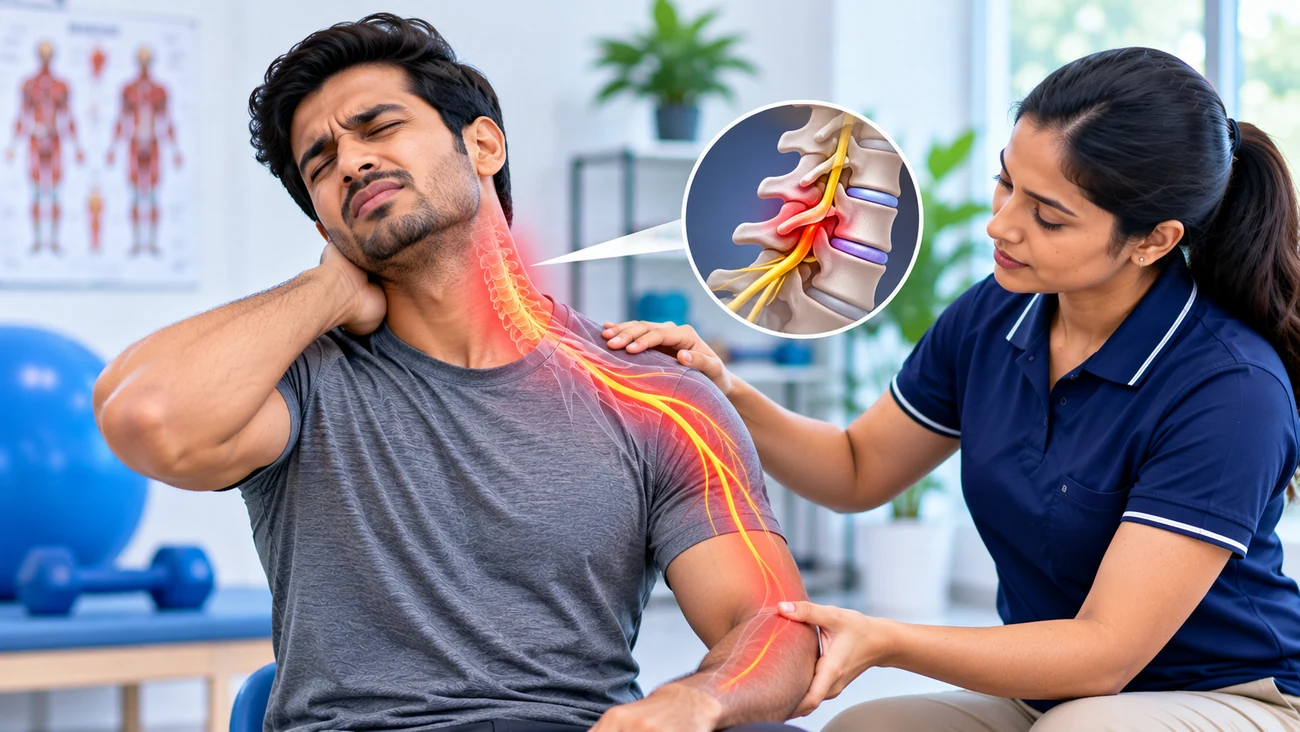
Have you ever suffered with neck pain that radiates down to your shoulder, arm or fingers? Have you also had a tingling or numb sensation in your hand and/or neck pain with stiffness? This can be associated with a cervical radiculopathy.
A cervical radiculopathy is caused by a nerve in the neck being irritated or compressed. This can make everyday tasks difficult such as using a computer, driving, carrying items or sleeping. Knowing the possible causes and treatments can help you know when to seek professional help.
What Is Cervical Radiculopathy?
A cervical radiculopathy (commonly referred to as a ‘pinched nerve’) occurs when a nerve root that branches off from the cervical spine becomes irritated or compressed.
The cervical spine includes 7 vertebrae that hold up your head and provide neck movement. Nerves branch off from the cervical spine to go to the shoulders, arms and hands. If a nerve becomes affected symptoms can radiate down the arm.
What Are the Common Symptoms of Cervical Radiculopathy?
Symptoms can vary depending on which nerve is affected and how severely it is irritated.
Common symptoms include:
- Neck pain: Discomfort or stiffness around the neck, sometimes increasing with certain movements.
- Pain radiating into the arm: Sharp, burning, or shooting pain that travels from the neck towards the shoulder, arm, or hand.
- Tingling sensations: Pins and needles in your fingers or hand.
- Numbness: Lost feeling in certain parts of the arm or fingers.
- Muscle weakness: Inability to lift objects, grasp them, or carry out daily tasks.
Some people experience arm symptoms even when their neck pain is mild.
What Causes Neck Pain That Travels Down the Arm?
Several conditions can irritate or compress nerves in the cervical spine.
1. Herniated or Bulging Disc
Cushions are provided by the disks that lie between the neck bones. A neighboring nerve root may become irritated by a bulging or herniated disk, resulting in discomfort or tingling that extends into the arm.
2. Age-Related Changes in the Spine
The gaps that allow nerves to pass through can get smaller as people age due to changes in their joints and disks. Nerve compression may be increased by these alterations.
3. Cervical Spondylosis
Age-related deterioration of the neck joints and disks is known as cervical spondylosis. It may occasionally exacerbate local nerve discomfort or compression.
4. Neck Injury
Certain injuries may irritate nerve roots by affecting the neck's disks, joints, or adjacent structures.
Is It Ordinary Neck Stiffness or a Pinched Nerve?
Neck pain is not always a sign of a nerve issue. Knowing the difference will help you determine whether a professional evaluation might be required. Muscle tightness, pain, and limited neck movement are common symptoms of ordinary neck stiffness.
Cervical nerve-related symptoms may additionally include:
- Pain travelling from the neck into the arm.
- Tingling or numbness in the fingers.
- Burning or electric-like sensations.
- Weakness in the arm or hand.
Cervical radiculopathy is not always confirmed by these symptoms. Similar issues can arise from other disorders, so a suitable clinical evaluation is crucial.
How Can Physiotherapy Help With Cervical Radiculopathy?
The goals of physiotherapy are to reduce discomfort, increase neck range of motion, and enhance daily functioning. Your symptoms, neck mobility, arm strength and sensitivity, and any functional limitations will all be evaluated by a physiotherapist. They will create a treatment plan based on this. Additional research may occasionally be required.
Treatment may include:
1. Gentle Neck Mobility Exercises
Reducing movement-related stiffness and preserving comfortable neck mobility may be possible with controlled movements.
2. Strengthening Exercises
The neck, shoulder, and surrounding muscles may become stronger and more resilient with the right exercises.
3. Posture and Ergonomic Guidance
You may be able to lessen needless neck strain by making changes to your daily routine, seating position, and workplace.
4. Manual Therapy
A physiotherapist may employ specific manual treatment techniques to treat stiffness and enhance mobility, depending on your condition.
5. Activity Modification
You can manage your symptoms during rehabilitation by following advice on lifting, sleeping positions, working habits, and physical activity. Not all techniques can be used on all patients and treatment should be tailored to the individual, especially if there are neurological symptoms or muscle weakness.
When Should You Seek Medical Attention?
Do not ignore symptoms that are becoming worse or affecting your ability to use your arms and hands.
Seek prompt medical assessment if you experience:
- Increasing arm or hand weakness.
- Persistent or worsening numbness.
- Difficulty gripping objects or coordinating hand movements.
- Problems with balance or walking.
- Symptoms affecting both arms or legs.
- New changes in bladder or bowel control.
Sudden significant weakness, major difficulty walking, or new bladder or bowel dysfunction requires urgent medical evaluation. These symptoms can indicate possible spinal cord involvement rather than an isolated nerve-root problem.
Where Can You Get Spine Pain Physiotherapy in Bangalore?
If neck pain or nerve related symptoms are affecting your daily life an appropriate assessment can be completed to determine what the next steps may be. PHYSIO X10 offer Spine Pain Physiotherapy for those suffering with various spine related issues including neck stiffness and cervical spine issues.
If you are local to Whitefield and surrounding areas Physiotherapy Clinic in Whitefield can help.
All recommendations will depend on your symptoms, clinical findings and individual rehab requirements.
Frequently Asked Questions
1. Can cervical radiculopathy cause tingling in the fingers?
Yes. Irritation or compression of a cervical nerve can cause tingling, numbness, or altered sensation in parts of the hand and fingers.
2. Can cervical radiculopathy improve without surgery?
Many cases improve with conservative management, which may include appropriate medication, activity modification, and physiotherapy. Treatment depends on symptom severity and clinical findings.
3. Is cervical radiculopathy the same as cervical spondylosis?
No. Cervical spondylosis describes age-related changes in the neck spine, while cervical radiculopathy describes symptoms caused by irritation or compression of a cervical nerve root. Spondylosis can sometimes contribute to radiculopathy.
4. Can sitting for long hours cause cervical radiculopathy?
Prolonged sitting and poor workstation habits may contribute to neck discomfort and stiffness. However, they do not necessarily cause cervical radiculopathy, which involves nerve-root irritation or compression.
Take the Right Step Towards Better Neck Health
Neck pain that travels down your arm should not be dismissed as ordinary stiffness, especially when accompanied by tingling, numbness, or weakness.Understanding your symptoms and getting an appropriate assessment can help you choose a suitable management approach.
If you are experiencing persistent neck or arm discomfort, Book an Appointment with PHYSIO X10 to discuss your physiotherapy needs.